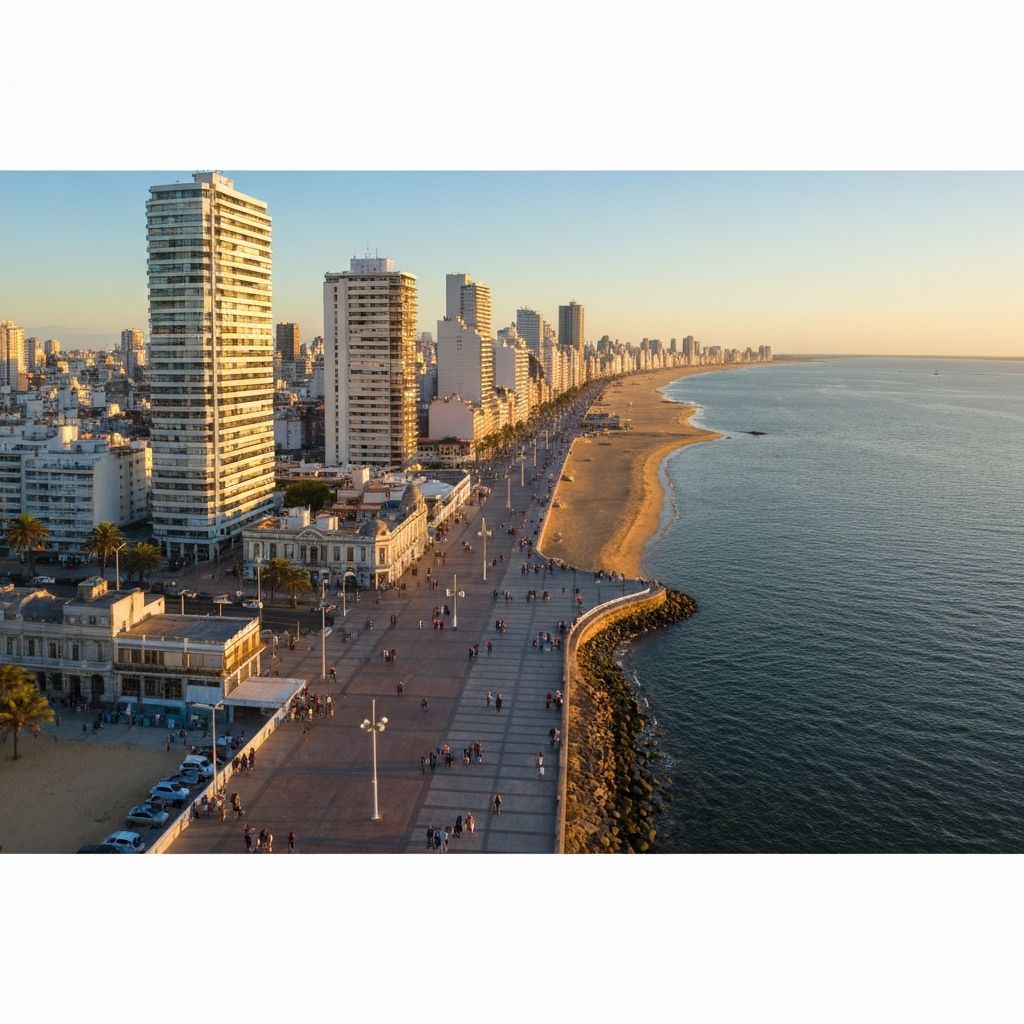
Why Live in Montevideo?
Montevideo is the city where most newcomers begin their life in Uruguay. Nearly every government office, embassy, university, major hospital, and international company is located here, making everyday bureaucracy significantly easier than elsewhere in the country.
The city combines modern amenities with a surprisingly relaxed atmosphere. While it is Uruguay's largest urban area, traffic is manageable by international standards and many neighborhoods are walkable.
Advantages
- Best healthcare in Uruguay.
- Largest expat community.
- Excellent restaurants and cafés.
- Reliable high-speed internet.
- International schools.
- Largest job market.
- Easy access to Carrasco International Airport.
- Extensive public transportation.
- Beautiful beaches and the 22 km Rambla.
Things to Consider
Living in Montevideo also comes with trade-offs.
- Higher rent than most other Uruguayan cities.
- More traffic than elsewhere in the country.
- Some neighborhoods experience petty theft.
- Winters can feel humid due to limited indoor heating.
- Bureaucratic processes are still slower than many Europeans or North Americans expect.
Cost of Living
A single person can generally live comfortably with US$1,800-2,500 per month, depending on housing choices and lifestyle.
Typical monthly expenses include:
- One-bedroom apartment: US$700-1,200
- Utilities: US$80-180
- Internet: US$30-45
- Mutualista healthcare: US$80-180
- Public transportation: affordable and widely available.
Best Neighborhoods
Pocitos
Popular among young professionals, expats, and remote workers thanks to its beach, cafés, gyms, and apartment buildings.
Punta Carretas
One of the city's most desirable residential areas with shopping, parks, and excellent restaurants.
Carrasco
Upscale neighborhood with spacious homes, international schools, and quiet streets.
Cordón
A vibrant district close to universities, coworking spaces, and nightlife.
Parque Rodó
Known for parks, culture, museums, and a younger atmosphere.
Ciudad Vieja
Historic center featuring colonial architecture, galleries, cafés, and nightlife.
Healthcare
Montevideo has Uruguay's best healthcare system. Most leading mutualistas and private hospitals are located here, alongside many English-speaking specialists.
Internet and Remote Work
Fiber internet is widely available throughout the city, with many homes receiving 300-1000 Mbps connections. Montevideo also has numerous coworking spaces and cafés suitable for remote work.
Transportation
Most residents rely on buses, walking, taxis, or ride-sharing services. Owning a car is optional in many neighborhoods, especially Pocitos, Cordón, Centro, and Punta Carretas.
Carrasco International Airport is approximately 30-40 minutes from downtown depending on traffic.
Things to Do
- Walk or cycle along the Rambla.
- Visit Mercado del Puerto.
- Explore Ciudad Vieja.
- Spend weekends at Pocitos or Buceo Beach.
- Visit museums and theaters.
- Attend Carnaval celebrations.
- Watch football matches.
- Explore local wineries nearby.
Day Trips
Popular day trips include:
- Punta del Este
- Colonia del Sacramento
- Piriápolis
- Atlántida
- José Ignacio
- Several wineries in Canelones.
Getting from Montevideo
Montevideo to Punta del Este
Driving takes approximately two hours, while direct buses operate throughout the day.
Montevideo to Colonia del Sacramento
Direct buses connect the cities in around 2.5-3 hours.
Montevideo to Buenos Aires
Regular ferries depart daily, with travel times ranging from approximately 2.5 to 4.5 hours depending on the service.
Frequently Asked Questions
Is Montevideo safe?
By Latin American standards, Montevideo is considered relatively safe, although normal precautions should be taken, especially at night.
Can you live in Montevideo without a car?
Yes. Many residents never own a car thanks to buses, taxis, ride-sharing services, and walkable neighborhoods.
Is Montevideo good for digital nomads?
Yes. Fast internet, coworking spaces, cafés, and a growing international community make it Uruguay's most popular city for remote workers.
Is Montevideo expensive?
It is Uruguay's most expensive city, but still significantly more affordable than many large cities in North America and Western Europe.