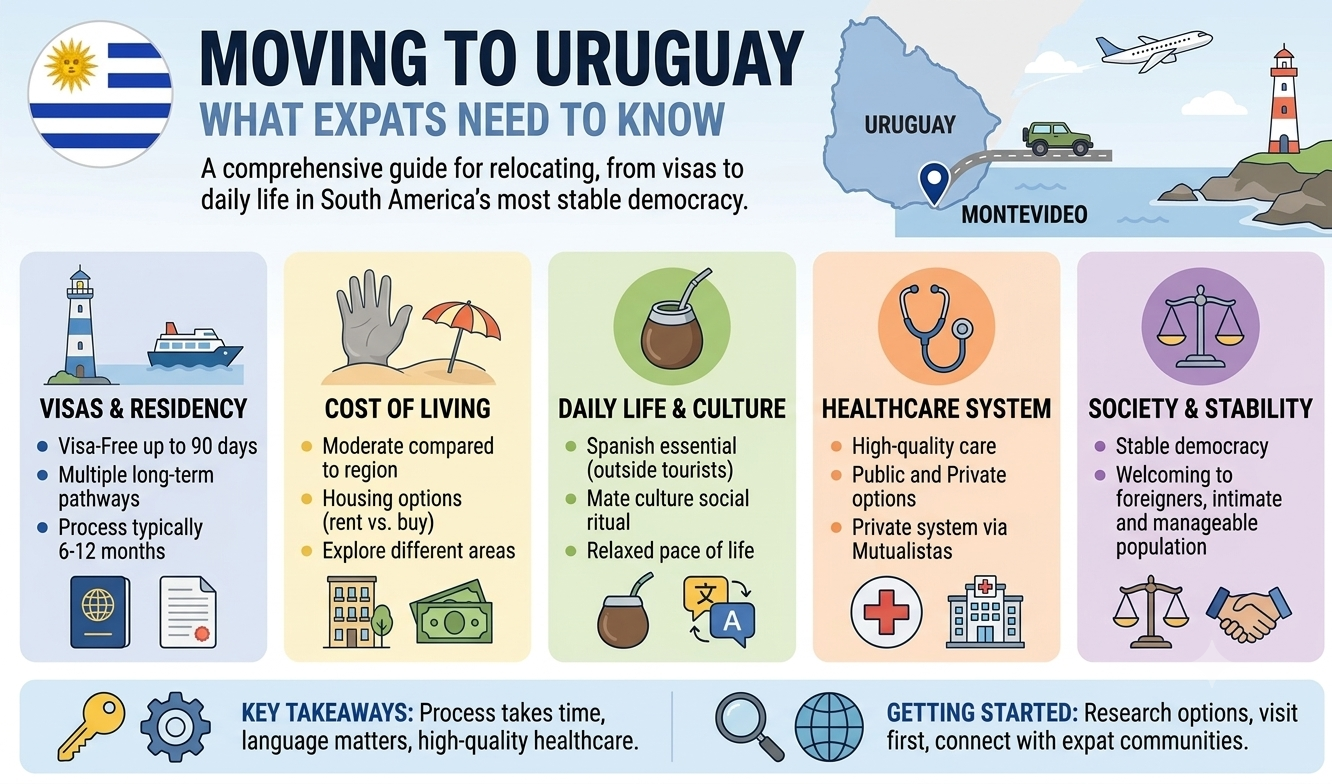
Why Move to Uruguay?
Uruguay has emerged as one of the most attractive destinations in Latin America for expats, digital nomads, and retirees. This small country tucked between Argentina and Brazil offers a unique combination of political stability, natural beauty, and quality of life that's hard to find elsewhere in the region.
The country consistently ranks as one of the most democratic and least corrupt nations in Latin America. With a population of just 3.5 million people, Uruguay feels intimate and manageable, especially compared to its larger neighbors.
Understanding the Visa and Residency Process
Before you start packing your bags, it's essential to understand your legal options for staying in Uruguay and residency process. The country offers several pathways to residency, each suited to different circumstances.
Tourist Visa
Most visitors from North America, Europe, and Australia can enter Uruguay without a visa for up to 90 days. This can be extended once for an additional 90 days by visiting the immigration office.
Temporary Residency
Temporary residency is the first step for most expats. You can apply based on employment, retirement income, investment, or family ties. This status needs to be renewed annually for the first three years.
Permanent Residency
After three years of temporary residency, you can apply for permanent residency. This gives you indefinite right to live and work in Uruguay.
Finding Your New Home
The housing market in Uruguay varies significantly by location. Montevideo offers everything from modern apartments to historic homes in charming neighborhoods. Beach towns like Punta del Este command premium prices, while smaller cities offer more affordable options.
Renting vs. Buying
Most newcomers start by renting, which is advisable until you're certain about your chosen location. Rental contracts typically require a garantía (guarantee), which can be provided through a property guarantee company or bank.
Healthcare and Insurance
Uruguay's healthcare system is a major draw for expats. The country has both public and private healthcare options, with the private system offering excellent care at reasonable costs.
Mutualistas
The private healthcare system is organized through mutualistas (health cooperatives). Monthly fees range from $50-150 USD and provide comprehensive coverage including hospital care, specialists, and medications.
Daily Life and Culture
Adjusting to Uruguayan culture is generally smooth for most expats. The pace of life is relaxed, and locals are known for their friendliness and openness to foreigners.
The Mate Culture
You'll quickly notice locals carrying thermoses and gourds everywhere. Mate (pronounced mah-tay) is the national drink, and sharing it is an important social ritual. Learning to participate in mate circles is a wonderful way to connect with locals.
Getting Started: Your First Steps
Moving to Uruguay is a significant decision, but with proper preparation, it can be the start of an exciting new chapter in your life.