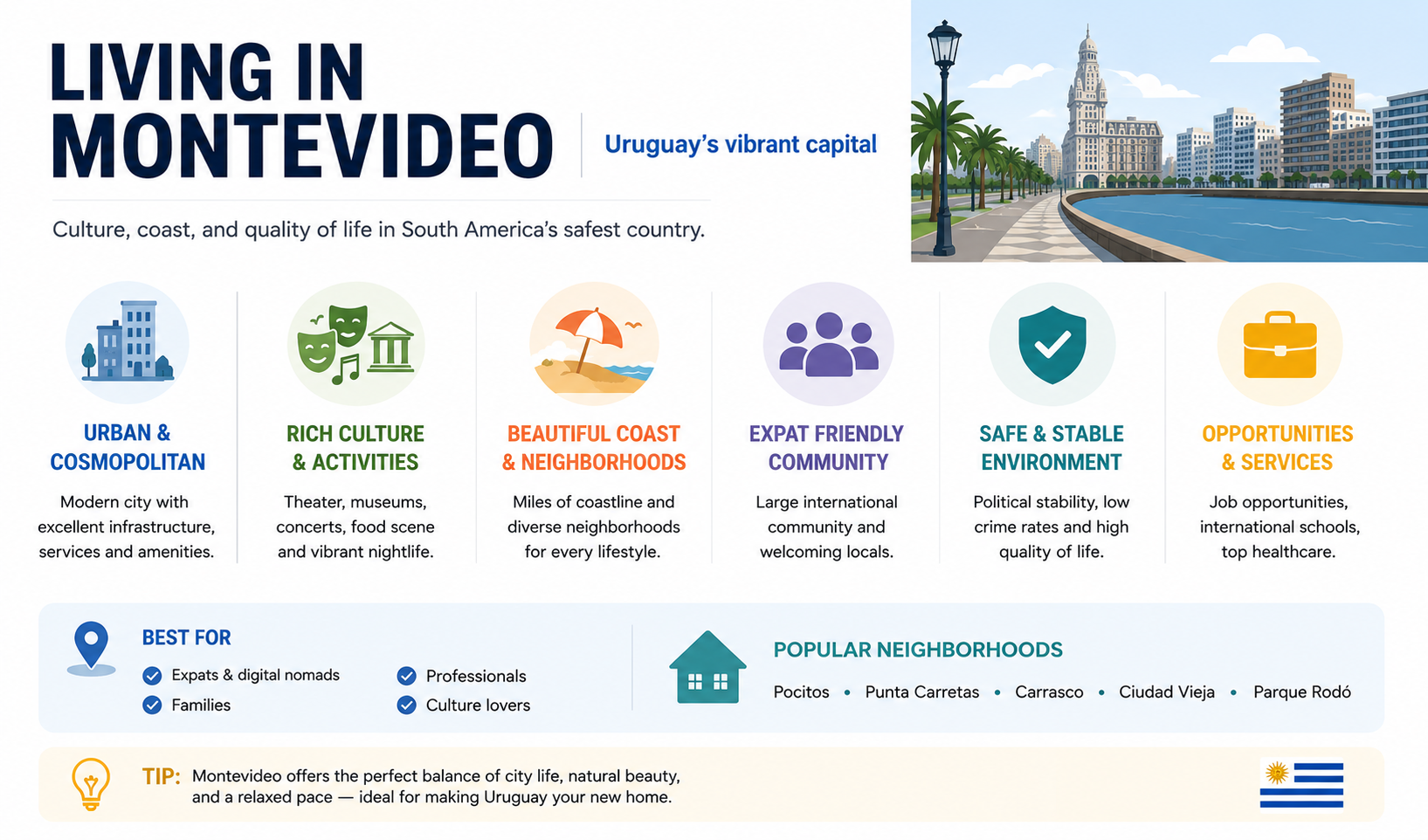
Welcome to Montevideo
Montevideo is where Uruguay's heart beats. As home to nearly half the country's population, it's the cultural, economic, and social center of the nation.
For expats, Montevideo offers the best of both worlds: the amenities and opportunities of a capital city with the relaxed pace Uruguay is famous for.
Understanding Montevideo
The city sprawls along the Río de la Plata, with a 22-kilometer waterfront promenade called La Rambla connecting diverse neighborhoods.
City Layout
- Centro/Ciudad Vieja: Historic downtown, business district
- Coastal neighborhoods: Pocitos, Punta Carretas, Carrasco
- Inland areas: Cordón, Parque Rodó, Tres Cruces
- Suburbs: Carrasco, Malvín, Prado
Best Neighborhoods for Expats
Pocitos
The most popular choice for newcomers. This beachfront neighborhood offers:
- Modern apartment buildings
- Restaurants, cafes, and shops
- Direct beach access
- Walkable streets
- Good public transit
- Rent: $500-800/month for 1-2 bedroom
Punta Carretas
Upscale and family-friendly:
- Punta Carretas Shopping (major mall)
- Golf club and parks
- Beautiful architecture
- Quieter than Pocitos
- Excellent schools nearby
- Rent: $600-1,000/month for 1-2 bedroom
Carrasco
Montevideo's most prestigious area:
- Large homes and gardens
- Tree-lined streets
- Near the airport
- International schools
- Country club lifestyle
- Rent: $800-1,500+/month
Ciudad Vieja
Historic and artistic:
- Colonial architecture
- Art galleries and theaters
- Bohemian atmosphere
- Lower rents
- Can feel quiet at night
- Rent: $400-600/month
Cordón
Central and practical:
- Near universities
- Budget-friendly
- Local neighborhood feel
- Good transit connections
- Less polished than coast
- Rent: $350-500/month
Daily Life in Montevideo
Pace of Life
Uruguayans embrace "tranquilo" - a relaxed approach to life. Don't expect fast service or punctuality. The afternoon siesta is still common, and stores may close 1-4 PM.
The Rambla
This waterfront promenade is the soul of Montevideo. Locals walk, jog, cycle, fish, and gather to watch sunsets. It's where you'll feel most connected to the city.
Mate Culture
You'll see Montevideanos everywhere carrying thermoses and mate gourds. This caffeine-rich tea is consumed throughout the day and sharing mate is a key social ritual.
Weekend Markets
Sunday's Feria de Tristán Narvaja is South America's largest street market. Neighborhood ferias throughout the week sell fresh produce, meat, and local products.
Getting Around
Public Transportation
Montevideo has an extensive bus network:
- Single fare: ~$1.20 USD
- STM card for discounts
- Routes cover entire city
- Generally reliable
Taxis and Uber
- Uber operates in Montevideo
- Taxis are metered and safe
- Start fare: ~$2 USD
- Short trips: $5-10 USD
Driving
- Not necessary for most residents
- Parking can be challenging
- International license valid 6 months
- Must convert to Uruguayan license
Walking and Cycling
- Coastal neighborhoods very walkable
- Bike lanes along Rambla
- City expanding cycling infrastructure
Healthcare in Montevideo
The capital has Uruguay's best medical facilities:
- British Hospital: Popular with expats
- Hospital Italiano: Excellent reputation
- Médica Uruguaya: Large mutualista
- CASMU: Another top private option
Emergency care is available 24/7, and English-speaking doctors can be found at major hospitals.
Entertainment and Culture
Dining
From traditional parrillas to international cuisine, Montevideo's food scene has expanded dramatically:
- Mercado del Puerto: Historic market with grilled meats
- Punta Carretas: Upscale dining options
- Pocitos: Trendy cafes and restaurants
Nightlife
- Centro and Pocitos have the best bars
- Clubs generally open late (1-2 AM)
- Ciudad Vieja has live music venues
- LGBTQ+ friendly scene
Arts and Culture
- Teatro Solís: Historic opera house
- MNAV: National visual arts museum
- Carnival: Longest in the world (40 days)
- Live music: Tango, candombe, rock
Challenges of Living in Montevideo
Weather
- Winter (Jun-Aug): Cold, gray, damp
- Can feel gloomy for months
- Heating important in winter
- Summer (Dec-Feb): Warm and humid
Bureaucracy
- Government processes move slowly
- Patience required for paperwork
- Many offices cash-only
- Hours can be limited
Language
- Spanish essential for daily life
- English less common than expected
- Many young people speak English
- Learning Spanish highly recommended
Is Montevideo Right for You?
Choose Montevideo if you:- Want urban amenities and culture
- Need good healthcare and schools
- Value safety and stability
- Appreciate walkable neighborhoods
- Don't mind occasional gray winters
- Want beach lifestyle (try Punta del Este)
- Prefer small-town charm (try Colonia)
- Seek lowest possible costs (try interior)
- Need complete English immersion (stay home)