Understanding Living Costs in Uruguay
Uruguay offers a comfortable lifestyle at a fraction of what you'd pay in major Western cities. However, costs can vary significantly depending on where you choose to live and your lifestyle preferences.
This guide provides realistic monthly expense estimates based on current 2026 data, helping you plan your budget before making the move.
Housing Costs
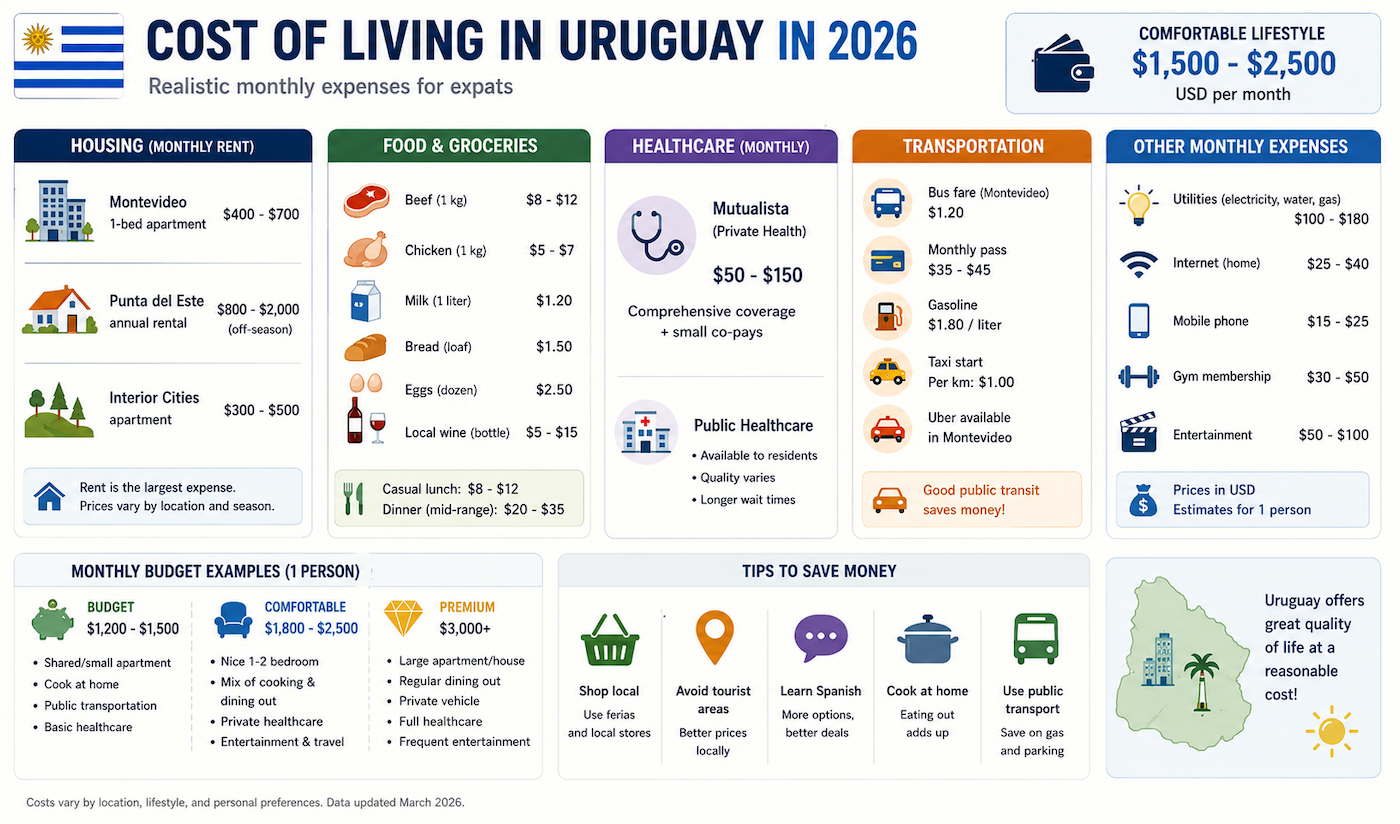
Housing is typically your largest monthly expense in Uruguay. Costs vary dramatically between Montevideo, beach towns, and interior cities.
Montevideo
In the capital, expect to pay:
- Studio/1-bedroom apartment: $400-700 USD/month
- 2-bedroom apartment in good area: $600-1,000 USD/month
- House rental: $800-1,500 USD/month
Popular neighborhoods like Pocitos, Punta Carretas, and Carrasco command premium rents, while areas like Cordón and Parque Rodó offer more affordable options.
Punta del Este
The famous beach resort is Uruguay's most expensive area:
- Annual rentals: $800-2,000 USD/month
- Summer season (Dec-Feb): 3-5x higher prices
- Off-season deals: Available but limited
Interior Cities
Cities like Colonia, Salto, and Maldonado offer lower costs:
- Apartments: $300-500 USD/month
- Houses: $400-800 USD/month
Food and Groceries
Monthly grocery costs for one person range from $200-400 USD depending on your preferences.
Supermarket Prices (2026 estimates)
- Beef (1 kg): $8-12 USD
- Chicken (1 kg): $5-7 USD
- Milk (1 liter): $1.20 USD
- Bread (loaf): $1.50 USD
- Rice (1 kg): $1.50 USD
- Eggs (dozen): $2.50 USD
- Local wine (bottle): $5-15 USD
- Imported cheese: $15-25 USD/kg
Dining Out
- Casual lunch: $8-12 USD
- Dinner at mid-range restaurant: $20-35 USD
- Coffee: $2-4 USD
- Beer at bar: $3-5 USD
Healthcare Costs
Healthcare in Uruguay is high-quality and affordable, especially compared to the US.
Mutualista (Private Health Cooperative)
- Monthly fee: $50-150 USD
- Covers comprehensive care including specialists, hospital, and medications
- Small co-pays for visits and prescriptions
Public Healthcare
- Available to residents
- Quality varies by location
- Long wait times for non-emergency care
Transportation
Uruguay has good public transportation, especially in Montevideo.
Public Transit
- Bus fare (Montevideo): $1.20 USD
- Monthly pass: $35-45 USD
Private Vehicle
- Gas: $1.80 USD/liter
- Car rental: $30-50 USD/day
- Parking: $2-5 USD/hour in cities
Taxis and Rideshare
- Uber available in Montevideo
- Taxi start: $2 USD
- Per km: $1 USD
Monthly Budget Summary
Budget Lifestyle: $1,200-1,500 USD
- Shared housing or small apartment outside center
- Cooking at home mostly
- Public transportation
- Basic healthcare
Comfortable Lifestyle: $1,800-2,500 USD
- Nice 1-2 bedroom in good area
- Mix of cooking and dining out
- Occasional taxis
- Private healthcare
- Entertainment and travel
Premium Lifestyle: $3,000+ USD
- Large apartment or house in premium area
- Regular dining out
- Private vehicle
- Full healthcare coverage
- Frequent entertainment