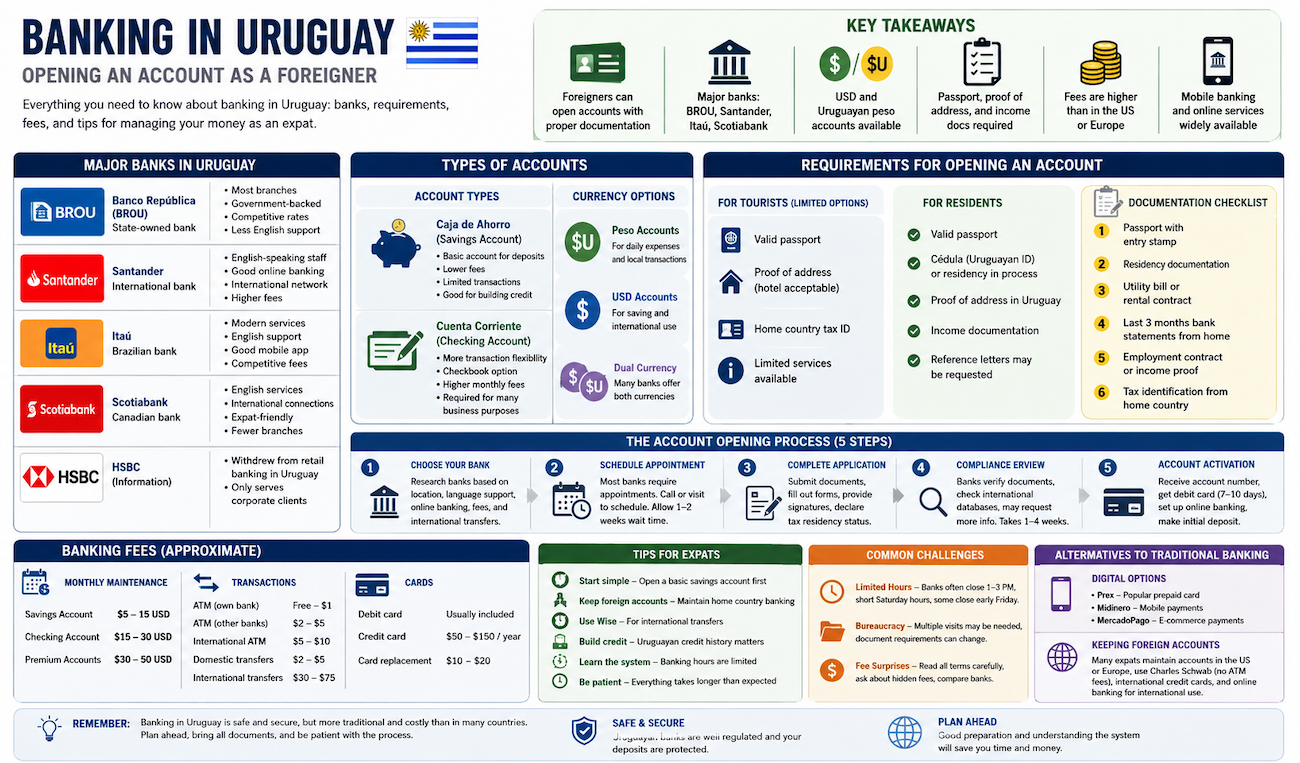
Understanding Banking in Uruguay
Opening a bank account is one of the essential tasks when settling in Uruguay. While the process can feel bureaucratic compared to online-first banks elsewhere, it's manageable with proper preparation.
This guide covers everything from choosing a bank to understanding fees and managing your money effectively.
Major Banks in Uruguay
BROU (Banco de la República Oriental del Uruguay)
The state-owned bank with:
- Most extensive branch network
- Government-backed security
- Competitive rates
- Less English support
- Can be bureaucratic
Santander
International bank offering:
- English-speaking staff available
- Good online banking
- International transfer network
- Higher fees
- Popular with expats
Itaú
Brazilian bank known for:
- Modern services
- English support
- Good mobile app
- Competitive fees
- Strong in business banking
Scotiabank
Canadian bank providing:
- English services
- International connections
- Expat-friendly approach
- Limited branch network
HSBC
- Withdrew from retail banking in Uruguay
- Only serves corporate clients
Types of Accounts
Caja de Ahorro (Savings Account)
- Basic account for deposits
- Lower fees than checking
- Limited transactions
- Good for building credit
Cuenta Corriente (Checking Account)
- More transaction flexibility
- Checkbook option
- Higher monthly fees
- Required for many business purposes
Currency Options
- Peso accounts: For local expenses
- USD accounts: For saving and international use
- Dual currency: Many banks offer both
Requirements for Opening an Account
For Tourists (Limited Options)
- Valid passport
- Proof of address (hotel acceptable)
- Home country tax ID
- Limited services available
For Residents
- Valid passport
- Cédula (Uruguayan ID) or residency in process
- Proof of address in Uruguay
- Income documentation
- Reference letters may be requested
Documentation Checklist
The Account Opening Process
Step 1: Choose Your Bank
Research banks based on:
- Branch locations near you
- English language support
- Online banking quality
- Fee structure
- International transfer options
Step 2: Schedule Appointment
Most banks require appointments:
- Call or visit to schedule
- Allow 1-2 weeks wait time
- Bring all documents
Step 3: Complete Application
At the appointment:
- Submit documents
- Fill out application forms
- Provide signatures
- Declare tax residency status
Step 4: Compliance Review
Banks perform due diligence:
- Verify documents
- Check international databases
- May request additional information
- Takes 1-4 weeks
Step 5: Account Activation
Once approved:
- Receive account number
- Get debit card (7-10 days)
- Set up online banking
- Make initial deposit
Banking Fees
Uruguayan banking fees are higher than many countries:
Monthly Maintenance
- Savings account: $5-15 USD
- Checking account: $15-30 USD
- Premium accounts: $30-50 USD
Transactions
- ATM withdrawals (own bank): Free or minimal
- ATM (other banks): $2-5 USD
- International ATM: $5-10 USD
- Domestic transfers: $2-5 USD
- International transfers: $30-75 USD
Cards
- Debit card: Usually included
- Credit card: $50-150 annual fee
- Card replacement: $10-20 USD
Managing Your Money
Currency Considerations
- Many expenses are in USD (rent, cars)
- Daily purchases in pesos
- Keep both currencies
- Monitor exchange rates
International Transfers
Options include:
- Bank wire transfers (expensive)
- Wise (TransferWise) - popular choice
- Western Union
- PayPal (limited functionality)
ATM Usage
- Daily withdrawal limits apply
- Inform home bank of travel
- Use bank ATMs for safety
- Avoid dynamic currency conversion
Tips for Expats
Common Challenges
Limited Hours
- Banks often close 1-3 PM
- Short Saturday hours
- Some close early Friday
- Plan visits accordingly
Bureaucracy
- Multiple visits may be needed
- Document requirements can change
- Patience is essential
Fee Surprises
- Read all terms carefully
- Ask about hidden fees
- Negotiate where possible
- Compare multiple banks
Alternatives to Traditional Banking
Digital Options
- Prex: Popular prepaid card
- Midinero: Mobile payments
- MercadoPago: E-commerce payments
Keeping Foreign Accounts
Many expats maintain:
- US or European accounts
- Charles Schwab (no ATM fees)
- International credit cards
- Online banking for international use